
Roses Articles
Rose Colors and Their Meanings: The Full Spectrum
Oct
Few questions arrive at our Beverly Hills counter more often than “what does this color rose actually mean?” Rose colors carry centuries of accumulated symbolism, botanical nuance, and practical significance for anyone choosing an arrangement, and this article walks through the full spectrum — from classic red and blush pink to the rarer lavender, peach, and coral varieties — explaining the science behind pigmentation, the etiquette of floriography, and how to actually use a rose color chart when you’re deciding what to send and why.
What Do Different Rose Colors Actually Mean?
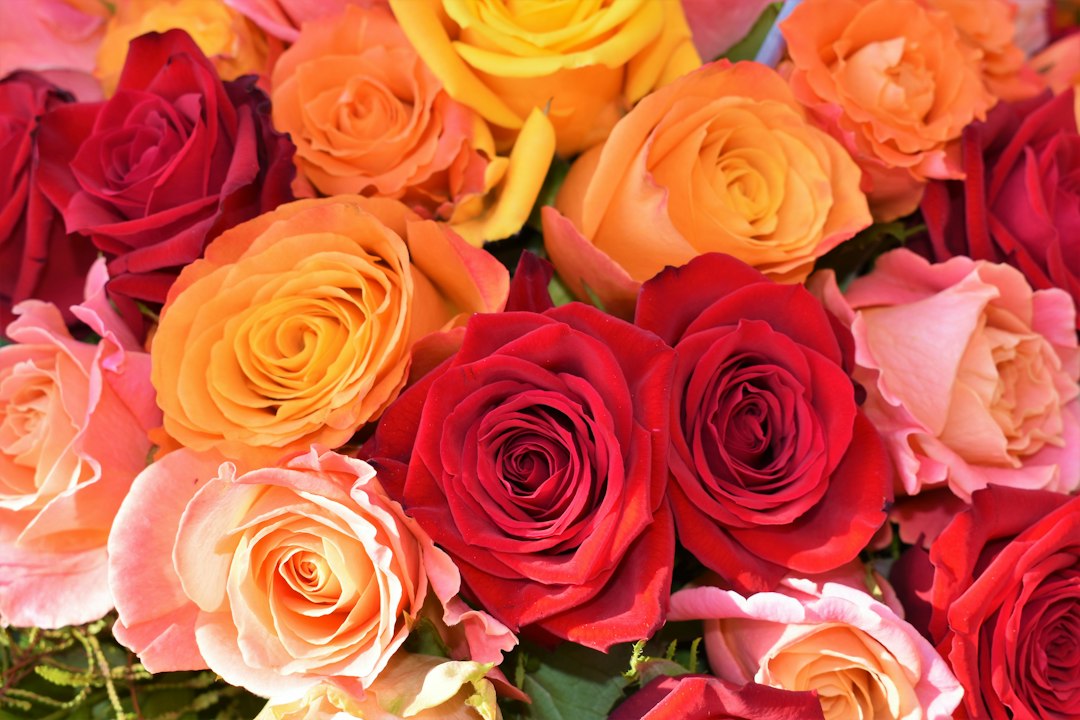
Each rose color corresponds to a distinct emotional message rooted in Victorian-era floriography, a formalized language of flowers that assigned specific meanings to bloom color, species, and even how a stem was presented. Red signals romantic love and desire, white communicates purity and remembrance, yellow expresses friendship and joy, and pink spans a range from gratitude to admiration depending on its depth of saturation. These associations were codified in the 1800s but remain the backbone of how florists advise clients today, including our own consultations at Muguet.
What makes rose color meaning more technical than most people realize is that hue alone isn’t the only variable — saturation and bloom stage matter too. A deep burgundy rose at full bloom conveys unconscious beauty or enduring love in classical Victorian texts, while that same genetic variety picked as a tight bud reads as a more restrained, formal gesture. Commercial growers in Ecuador and Colombia, which supply roughly 80% of the cut roses sold in the United States according to USDA import data, cultivate dozens of named cultivars specifically bred to hit precise shades on a standardized rose color chart used by wholesalers worldwide.
How Does a Rose Color Chart Help You Choose?
A rose color chart is a visual reference tool, typically organized by hue families (red, pink, white, yellow, orange, purple, green, and bicolor), that wholesalers and florists use to standardize ordering and communicate exact shades across a supply chain spanning multiple countries. Instead of asking for “pink roses,” a florist can specify Pink Mondial, Sweet Akito, or Quicksand by name and guarantee the client receives the precise blush tone shown in a catalog photo.
For consumers, a simplified version of this chart is genuinely useful when browsing online. Rather than guessing whether “coral” will look more orange or more pink in person, cross-referencing a chart against product photography reduces the chance of disappointment on delivery day. We recommend viewing our full Roses collection alongside any color chart to compare live arrangement photos against named shade categories before placing an order.
What Are the Main Rose Colors and Their Symbolic Meanings?
The primary rose color families each carry a distinct symbolic weight, and understanding these eight to ten core categories covers roughly 95% of what’s commercially available at any premium florist. Red remains the top seller year-round, accounting for an estimated 60% of all rose stems sold during Valentine’s week alone in the US cut-flower market, followed by white, pink, and yellow in that order.
Beyond the four classic colors, modern breeding programs have introduced shades that didn’t exist in commercial quantities even twenty years ago, including true lavender tones and multi-tonal coral blends. These newer entries have added real depth to floriography because they fill symbolic gaps the Victorians never addressed, like interest-at-first-sight or quiet optimism.
What Does Each Rose Color Chart Category Represent?
Below is a breakdown of the meanings most consistently attributed to each major rose color, drawn from classical floriography sources and modern florist convention:
- Red: Romantic love, passion, and deep respect — the classic choice for anniversaries and Valentine’s Day.
- White: Purity, new beginnings, and remembrance; frequently chosen for weddings and sympathy tributes.
- Pink (light): Gratitude, admiration, and gentleness, often sent as a thank-you gesture.
- Pink (deep/hot): Appreciation and enthusiastic thanks, slightly more energetic than pale pink.
- Yellow: Friendship, joy, and platonic affection — historically also linked to jealousy in older Victorian texts.
- Orange: Enthusiasm, fascination, and energetic desire, often positioned between red’s passion and yellow’s warmth.
- Peach rose meaning: Sincerity, gratitude, and modesty — a softer alternative to orange, popular in corporate thank-you arrangements.
- Coral rose meaning: Desire, enthusiasm, and friendship blended together, making it a versatile choice for both romantic and platonic gifting occasions.
- Lavender rose: Enchantment, love at first sight, and mystery; associated with a sense of the unattainable or extraordinary.
- Green: Harmony, abundance, and renewal, usually seen in the blush-green cultivar “Mint Majolik” used as an accent rather than a focal bloom.
Florists frequently combine two or three of these shades within a single arrangement to layer meanings — pairing coral with peach, for instance, softens a purely romantic message into something appropriate for a close friend or mentor.
Shop Our Signature Collection
Hand-crafted luxury bouquets from our Rodeo Drive atelier, with same-day delivery across Beverly Hills, Bel Air & Los Angeles.
How Is Rose Color Determined at the Genetic and Horticultural Level?
Rose color is governed primarily by two pigment classes: anthocyanins, which produce red, pink, and purple tones, and carotenoids, which produce yellow and orange hues. The relative concentration and chemical modification of these pigments within petal cells determines the final visible shade, and soil pH, sunlight exposure, and temperature during the 4-to-6-week bud development period can all shift intensity by a noticeable margin.
True blue and black roses do not exist naturally because rose genomes lack the enzyme delphinidin 3,5-diglucoside pathway needed to produce blue anthocyanin pigments in sufficient quantity; commercially sold “blue” or “black” roses are white or deep-red cultivars that have been dyed or dip-treated after cutting. This is a detail worth knowing before ordering, since a genuinely lavender rose — a true genetic variety like Cool Water or Blue Curiosity — looks noticeably different from an artificially tinted stem.
Why Do Lavender Rose and Coral Rose Varieties Cost More?
Lavender rose and coral rose varieties typically cost 15% to 30% more per stem than standard red or white roses because they require more selective breeding programs and often yield lower per-acre harvest volumes. Cultivars like Moonstone (lavender) and Free Spirit (coral-orange blend) are grown in smaller batches at high-altitude Ecuadorian farms, where cooler nights around 50°F intensify pigment saturation but reduce overall stem count per plant.
This pricing reality explains why a dozen lavender roses might run $95 to $140 at a premium florist, compared to $65 to $90 for a comparable dozen in classic red. The scarcity isn’t artificial — it reflects genuine agricultural constraints, including the fact that some lavender cultivars produce blooms only 2.5 to 3 inches in diameter, smaller than the 3.5-to-4-inch heads typical of mainstream red varieties like Freedom or Explorer.
How Do You Choose the Right Rose Color for an Occasion?
Choosing the right rose color starts with identifying the relationship and tone you want to convey, then matching that intent against the symbolic associations outlined earlier in this guide. A first anniversary gift calls for deep red or burgundy, while a congratulatory gesture for a colleague’s promotion reads better in yellow, peach, or a soft coral blend that avoids romantic implications entirely.
Seasonal availability also plays a practical role. Peach and coral cultivars tend to peak in supply during spring and early summer, while deep red varieties are grown in the highest volume year-round specifically to meet February demand. Ordering two to three days ahead of a major holiday, rather than the day before, measurably improves the odds of receiving your first-choice shade rather than a substitute.
Which Rose Colors Suit Specific Occasions Best?
The table below maps common occasions to recommended rose colors, typical arrangement size, and average vase life, based on standard florist practice:
| Occasion | Recommended Rose Color | Typical Stem Count | Average Vase Life |
|---|---|---|---|
| Romantic anniversary | Red or deep burgundy | 12–24 stems | 7–10 days |
| Sympathy tribute | White or pale pink | 18–36 stems | 6–9 days |
| Thank-you gesture | Peach or light pink | 6–12 stems | 5–8 days |
| New friendship / congratulations | Yellow or coral | 12 stems | 6–8 days |
| Mysterious admiration | Lavender | 6–12 stems | 5–7 days |
For occasion-specific shopping, our Anniversary collection features curated red and burgundy arrangements, while clients sending congratulatory gifts often browse the Congratulations category for yellow and coral options pre-matched to that tone.
What Role Does Rose Color Play Compared to Other Flowers?
Rose color carries more codified symbolic weight than almost any other flower family, partly because floriography developed red and white rose meanings first before expanding outward to other species. Tulips, by comparison, carry simpler color associations largely centered on perfect love (red) and cheerful thoughts (yellow), with far less historical layering than roses have accumulated over nearly two centuries.
This doesn’t mean other flowers lack nuance — orchids communicate strength and refined luxury regardless of color, and hydrangea color shifts are driven by soil aluminum content rather than genetic pigment variety, an entirely different mechanism than what governs rose coloration. Readers interested in how other species compare can find more detail in our guide to tulip color symbolism, which outlines a simpler but equally useful framework.
How Does Floriography Treat Rose Color Differently From Other Blooms?
Floriography treats rose color with more granularity than almost any other flower because 19th-century dictionaries of flower meaning devoted entire sub-sections exclusively to rose shade variations, something rarely done for tulips, daisies, or carnations in the same texts. A single Victorian flower dictionary might list twelve distinct rose meanings by color and form, compared to three or four for most other species.
This historical emphasis persists in how modern florists are trained. At Muguet, color selection for rose orders undergoes a more detailed consultation process than for other stems specifically because clients expect — and rely on — that layered symbolic precision. For a deeper comparative look at how red roses specifically stack up against other romantic flower choices, see our article on flowers that symbolize love beyond red roses.
My Experience with Rose Colors
Over nine years arranging bouquets for Beverly Hills clients, I’ve watched rose color preferences shift in ways the symbolism books never predicted. Lavender rose orders increased noticeably after 2019, and I now estimate roughly one in eight custom arrangement requests at our shop specifically asks for lavender or mauve tones, up from what felt like one in fifty a decade earlier. Clients describe wanting something that photographs differently than the red roses they see everywhere on Instagram, and lavender delivers that visual distinction immediately.
I’ve also learned through trial and error that coral rose meaning resonates most with clients celebrating milestone birthdays rather than romantic occasions, which surprised me early in my career. I once assembled a 24-stem coral and peach arrangement for a client’s 40th birthday, expecting her to want something bolder, and she specifically requested that softer palette because, in her words, it felt “celebratory without being loud.” That comment stuck with me, and I now actively suggest coral or peach combinations whenever a client describes wanting warmth without overt romantic signaling. One technical lesson from years of sourcing: true lavender roses bruise more easily during transport than red varieties, so we inspect every stem’s petal edges under direct light before an arrangement leaves our workroom, rejecting roughly 5% of lavender stems that pass fine for red cultivars.
Order from Muguet Florist, Beverly Hills
Shop These Arrangements
Our Floral Services
Same-Day Delivery Areas
Send Flowers Today
Order by our same-day cutoff for hand-delivered arrangements across Beverly Hills, Bel Air, Hollywood & Los Angeles.
FAQ
What is the rarest natural rose color?
True lavender and mauve-toned roses are among the rarest naturally occurring colors because they require a specific anthocyanin balance that most commercial breeding programs have only successfully stabilized in the last three decades, with cultivars like Blue Curiosity and Cool Water remaining limited in global production volume compared to red or white varieties.
Do rose colors fade or change after cutting?
Yes, most cut rose colors gradually soften or darken slightly over their 5-to-10-day vase life as petal cells lose water pressure and pigment concentration shifts, with white roses sometimes developing a faint pink or cream tint near the edges as they age, particularly if kept near direct sunlight or temperatures above 75°F.
Are dyed roses the same as naturally colored rose varieties?
No, dyed roses are typically white cultivars like Akito or Tineke treated with colored dye solutions absorbed through the stem, producing shades such as blue, black, or rainbow-petaled effects that don’t occur through natural rose genetics, whereas naturally colored varieties like peach, coral, and lavender roses are bred to produce those pigments within the plant itself.
How many rose colors are available for everyday ordering?
Most premium florists stock between 10 and 15 distinct rose colors as standard inventory, including red, white, pink, yellow, orange, peach, coral, and lavender, while specialty or seasonal shades like green-tinted or bicolor varieties are typically available by special order with 3 to 5 days of advance notice.
When you’re ready to see these shades in person rather than on a chart, browsing a Wrap Bouquet style arrangement is one of the easiest ways to compare multiple rose colors side by side in a single gift. For a more exhaustive breakdown of rose varieties beyond color alone, our field guide to rose types covers cultivar structure, petal count, and bloom form in further technical detail.
Sources
Royal Horticultural Society
Wikipedia
