
Christmas Articles
Poinsettia Care: A Complete Guide to Keeping Christmas Plants Alive and Reblooming
Nov
Poinsettia care determines whether a pot from our Christmas collection holds its color through January or sheds its leaves within days. In this article, you will discover how to read light, temperature and soil moisture, how to diagnose leaf drop, and how long a potted plant realistically lasts. You will also find a month-by-month calendar for reblooming a poinsettia by the next holiday season, plus notes for warm, dry Southern California homes.
How Do You Handle Poinsettia Care for Indoor Plants?
Indoor poinsettia care rests on three pillars: bright indirect light, soil that dries slightly between waterings, and steady room temperatures between 65°F and 70°F. The pot must drain freely and never sit in standing water. Botanically, the plant is Euphorbia pulcherrima, a tropical shrub from Mexico, so cold snaps hurt it faster than a missed watering does.
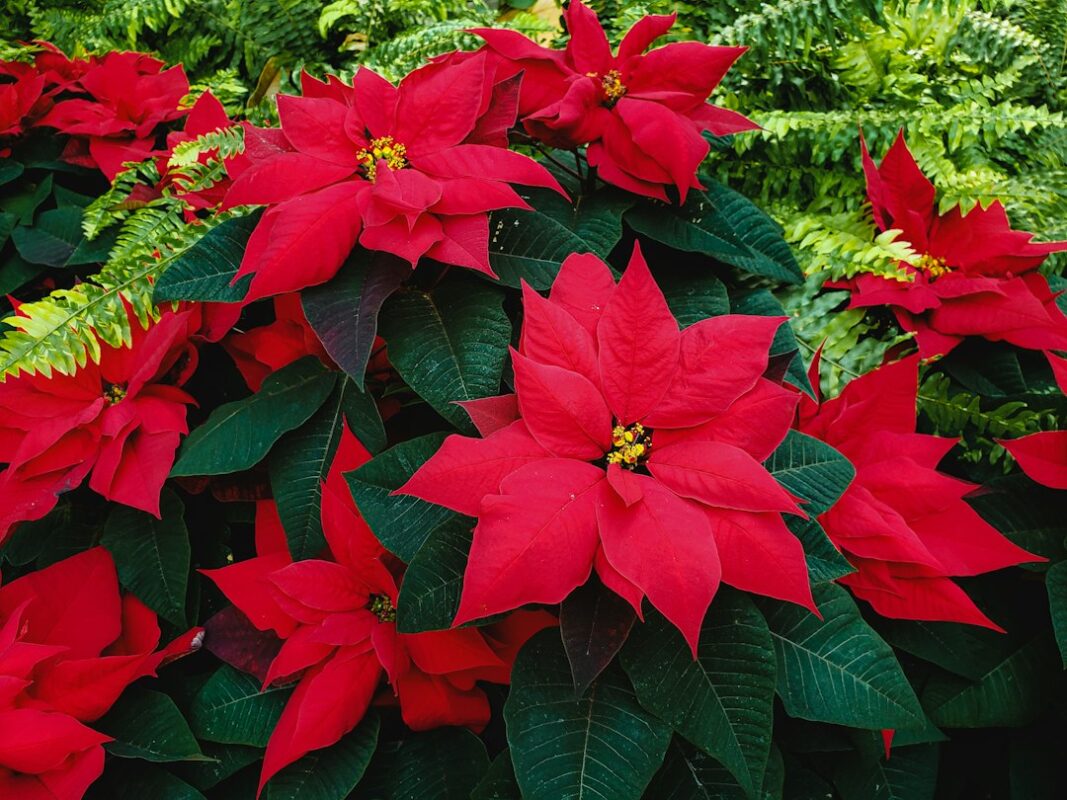
The red, white, pink or marbled “petals” are bracts, which are modified leaves. The true flowers are the tiny yellow clusters at the center, called cyathia. Healthy cyathia mean the bracts are still fresh, so inspect them when you buy a plant. Choose one with dark green foliage down to the soil line and unopened or barely shedding yellow centers.
What Does a Quick Poinsettia Care Checklist Look Like?
A poinsettia care checklist reduces the plant’s needs to six checks that take about two minutes each week. Run through them every time you pass the pot. Catching a draft or a soggy saucer early costs nothing, while recovering from root rot rarely succeeds.
Weekly habits matter more than occasional heroic efforts. A plant that receives modest, consistent attention outlasts one that is soaked, moved and fussed over irregularly. Keep a small saucer, a watering can with a narrow spout and a notepad near the pot so the routine becomes automatic.
- Light: at least 6 hours of bright, indirect light daily
- Temperature: 65°F to 70°F by day, never below 55°F at night
- Soil check: water only when the top inch feels dry
- Drainage: empty the saucer or foil sleeve after 15 minutes
- Air: keep the plant away from heat vents, dryer vents and cold glass
- Fertilizer: none while the bracts show full color
Where Should You Place a Poinsettia? Light and Temperature
A poinsettia belongs in a spot with bright, indirect light, steady warmth and no moving air. East, south and west windows all work when a sheer curtain softens the strongest afternoon rays. Plants kept in dim corners lose lower leaves because the canopy cannot support itself on weak light.
Temperature stress is the second most common reason that store-bought plants fail. Euphorbia pulcherrima tolerates a narrow comfort band, and rapid swings of 15°F or more trigger leaf drop. Choose a location where the thermostat reading stays predictable from morning to night.
Which Windows Give a Poinsettia the Best Bright, Indirect Light?
An east-facing window gives a poinsettia the gentlest light, with direct sun only in the early morning. South and west windows deliver stronger light, so pull the pot 2 to 3 feet back from the glass or filter it through a sheer panel. Direct midday sun through glass can scorch bracts and fade their color.
North windows rarely supply enough brightness during the short days of December. Rotate the pot a quarter turn every week so all sides receive equal light and the shape stays even. Wipe dust from the leaves with a damp cloth once a month, because a dusty canopy absorbs less light.
What Temperature Range Suits Poinsettia Care, and What Should You Avoid?
The ideal temperature range for poinsettia care runs from 65°F to 70°F during the day and a little cooler at night. Exposure below 50°F damages tissue, and a ten-minute walk from car to doorstep in cold wind can start the decline. Wrap the pot in paper or a sleeve when transporting it in winter.
Warm, dry homes in Los Angeles carry their own hazards. Forced-air heat vents, dryer vents, fireplaces and sunny glass all push the surrounding air well above 75°F and strip humidity. Pair the plant with a pebble tray, or group it with other holiday houseplants so their combined transpiration raises the humidity nearby. Even a graceful Orchids display beside it benefits from this shared microclimate.
- Place the pot at least 3 feet from any heat register
- Keep foliage from touching cold window panes
- Avoid entryways that open to outdoor air
- Skip the top of the refrigerator or television, where warm exhaust rises
Shop Our Signature Collection
Hand-crafted luxury bouquets from our Rodeo Drive atelier, with same-day delivery across Beverly Hills, Bel Air & Los Angeles.
How Often Should You Water a Poinsettia?
Poinsettia watering should follow soil feel rather than a calendar, which usually means every 5 to 10 days in a heated room. Water thoroughly until liquid runs from the drainage holes, then let the pot empty completely. Excess water is the leading cause of death in potted poinsettias.
Pot size, room warmth and light all shift the interval. A 6-inch pot in a sunny 70°F room dries faster than an 8-inch pot in a cool hallway. Learn the weight of the pot after watering and again when dry, because lifting it reveals moisture faster than any schedule.
How Do You Check Soil for Proper Poinsettia Watering?
The soil check for a poinsettia uses your index finger: push it one inch into the mix and water only if it feels dry. Soil that clings to your skin or feels cool stays untouched for another day or two. Well-draining potting soil, ideally blended with perlite or coarse bark, dries evenly and resists compaction.
Lukewarm water is gentler than cold tap water on tropical roots. Pour slowly around the stems and avoid soaking the bracts, since wet bracts invite gray mold in cool rooms. Morning watering lets surface moisture evaporate before the cooler evening hours.
How Do Pots and Foil Sleeves Affect Poinsettia Care?
Decorative foil sleeves trap runoff around the roots and hold poinsettias in standing water, which causes root rot within days. Punch a hole in the bottom of the foil or remove the sleeve at every watering. Set the plastic grower pot on a saucer, or slip it inside a cachepot that holds a spare inch of space below it.
Telling overwatering from underwatering saves plants. Both conditions cause drooping, but the soil and leaf texture reveal the true cause.
| Condition | Soil | Leaves | Response |
|---|---|---|---|
| Overwatering | Wet, heavy, sometimes sour-smelling | Yellow, soft, dropping from the bottom | Empty the saucer, let the top 2 inches dry |
| Underwatering | Dry, pulling from the pot edge | Crisp edges, limp bracts, drooping tips | Water thoroughly, drain after 15 minutes |
Why Are the Leaves Dropping Off My Poinsettia?
Poinsettia leaves drop mainly because of cold exposure, overwatering, drafts, dry air or low light. Premature leaf drop signals stress rather than normal aging, so work through the likely causes in order. Start with the soil, then check the surrounding temperature.
A few lower leaves yellowing in January is routine as the plant ages. Heavy shedding across the whole canopy within a week points to a recent shock, such as a chilly delivery or a move near a vent. The table below maps each symptom to a probable cause and fix.
| Symptom | Likely cause | Fix |
|---|---|---|
| Green leaves falling suddenly | Cold drafts or a temperature drop below 50°F | Move to a stable 65°F to 70°F spot |
| Yellow lower leaves, damp soil | Overwatering or blocked drainage | Empty the saucer, remove foil, let the soil dry |
| Wilting with dry soil | Underwatering | Soak thoroughly, then drain completely |
| Brown, crisp leaf edges | Dry air from heat vents | Relocate 3 feet away, add a pebble tray |
| Pale, leggy growth | Low light | Move to a brighter east or south window |
When Should I Throw Away My Poinsettia?
A poinsettia deserves composting when the stems turn black, mushy or hollow at the base. Those signs mean advanced root rot, and no change in watering will restore the tissue. Scratch a stem lightly with a fingernail: green underneath means the plant lives, while brown and dry means it does not.
A plant with faded bracts but firm green stems is still a viable houseplant and can be saved for reblooming. Keep it when the stem base is firm and new leaf buds appear along the nodes. Discard it only after you find rot, widespread shriveling or a pot that smells sour even after the soil dries.
How Long Will a Potted Poinsettia Last?
A potted poinsettia typically keeps its colorful bracts for several weeks to a couple of months indoors, provided it receives proper care. The plant itself can live for years, because the bracts fade long before the shrub does. Longevity depends on how healthy the plant was when you chose it.
Plants chosen from a protected, indoor display last longer than ones exposed at a roadside stand or cold entrance. Look for tight, unopened cyathia and bracts that are fully colored, and buy after the chill has lifted. For gifting, our Gift selection arrives wrapped to protect the plant during delivery.
Can I Keep a Poinsettia as a Houseplant?
A poinsettia can live indefinitely as a houseplant, growing into a shrub 2 to 3 feet tall under steady care. After the holidays, treat it like a leafy tropical, with bright light and measured watering. Color will fade in late winter, and the plant may drop lower leaves as it rests.
Fertilizer enters the routine once new growth begins in spring. Use an all-purpose houseplant fertilizer, such as Miracle-Gro, and follow the label directions for dilution and frequency. Do not fertilize while the bracts show peak color, since the plant is already at its seasonal maximum. For styling ideas that pair well with a living plant, browse our Home Decor collection.
Is Miracle-Gro Good for Poinsettias?
Miracle-Gro all-purpose houseplant fertilizer suits poinsettias during active growth, from spring through early autumn. Mix it exactly as the label directs and water the plant first so the roots are not burned. Avoid applying it to dry soil or during winter dormancy.
Overfeeding produces soft, weak stems and can scorch root tips. Stop fertilizing around the time you begin the short-day routine in autumn. Flush the pot with plain water once a month during the growing season, so mineral salts do not build up along the pot rim.
Can Poinsettias Survive Outside?
Poinsettias survive outside only where nights stay above 50°F, which limits year-round outdoor growing to mild, frost-free regions such as parts of Southern California. Frost kills tissue quickly, and cold rain can cause leaf drop. In cooler regions, poinsettias are strictly indoor plants from late autumn through spring.
Summer outdoors is a different story. A pot placed in bright shade from late spring until nights cool in autumn grows fuller, and the extra light builds energy for the next display. Bring it inside well before the first cold night. Our December guide to narcissus, holly and poinsettia symbolism and care offers more background on this seasonal plant.
Do Poinsettias Do Better Inside or Outside?
Poinsettias do better inside during winter and better outside in summer, as long as outdoor temperatures stay between 60°F and 80°F. Indoors, stable warmth protects bracts. Outdoors, higher light intensity and open air promote stronger stems and denser foliage.
Move the plant gradually, spending a week in shade before it takes more sun. Sudden full-sun exposure bleaches leaves in a single afternoon. Full outdoor cultivation, including pruning shrubs in garden beds, is a separate topic that deserves its own guide.
How Do I Save My Poinsettia Plant for Next Year?
Saving a poinsettia for next year means drying it gradually in spring, cutting the stems back, repotting, feeding through summer, pinching new growth, and giving it long uninterrupted nights from autumn. Poinsettias do regrow every year when you follow that sequence. The plant is a short-day species, so flower color depends on darkness, not temperature alone.
Success depends on timing. Begin reducing water in March, prune in April, and start the dark routine around the end of September. Missing the window by two or three weeks usually delays color past the holiday season.
What Does a Month-by-Month Poinsettia Care Calendar Look Like?
A poinsettia care calendar spans twelve months and follows the plant’s growth cycle from display to rest, regrowth and recoloring. Each stage has a single main job. Mark the dates on a wall calendar to prevent drift.
Southern California homes may stay warm enough to skip some indoor cooling steps. Keep nights above 55°F and watch for stress during heat waves.
| Month | Task | Key detail |
|---|---|---|
| December to February | Display and routine watering | Bright indirect light, top inch dry before watering |
| March | Begin drying | Water sparingly as bracts fade |
| April | Cut back and repot | Trim stems to 4 to 6 inches, use fresh well-draining soil |
| May | Resume watering and feeding | Fertilize at label rate once new growth appears |
| June to August | Summer outdoors | Bright shade, pinch tips every few weeks |
| September | Final pinch, bring indoors | Stop pinching by early September |
| October to November | Short-day routine | 14 hours of darkness, 10 hours bright light |
What Happens If You Don’t Prune a Poinsettia?
An unpruned poinsettia grows tall, thin and sparse, with only a few large bracts at the tips. Pruning in April and pinching through summer encourage branching, so a single stem becomes six or more flowering shoots. Without that discipline, the plant takes on the leggy look of a neglected shrub.
Cut each stem to 4 to 6 inches above the soil, just above a node. Pinch the soft tip of each new shoot after it grows 4 to 6 inches, leaving three or four leaves. Stop pinching by early September, because later cuts remove the buds that will turn into bracts.
How Does the Closet Method Work for Poinsettia Reblooming?
The closet method gives a poinsettia 14 hours of complete darkness each night so its bracts change color. Start around the end of September or early October and continue for 8 to 10 weeks. Even a brief flash of room light can reset the clock.
Return the plant to bright light each morning for the remaining 10 hours and keep water and temperature steady. The steps below keep the schedule consistent.
- Place the pot in a dark closet or cover it with a box from about 5 p.m.
- Keep nighttime temperatures between 60°F and 65°F.
- Uncover the plant at about 7 a.m. and set it in a bright window.
- Water when the top inch of soil is dry and avoid disturbing the pot at night.
- Stop the routine once colored bracts are well developed in late November.
What Is the Secret to Keeping Poinsettias Alive?
The secret to keeping poinsettias alive is moderation: steady warmth, bright indirect light, careful watering and protection from drafts. Most losses come from overwatering and cold exposure, not neglect. Consistency beats attention, so choose a spot, learn the pot’s weight and resist moving the plant.
Holiday houseplants such as amaryllis and Christmas cactus follow different rules, with bulbs that need dry rest and succulents that prefer drier soil. Poinsettias want slightly more moisture and consistent warmth than either. For a lasting luxury alternative, a potted Phalaenopsis from our orchid range tolerates the same bright windows with less fuss.
My Experience with Poinsettia Care in a Dry Southern California Home
I have grown poinsettias in a south-facing living room in Los Angeles for several winters, and my early losses were nearly all drainage mistakes. One 8-inch plant sat in its foil sleeve for two weeks, and the stems turned dark at the base before I noticed. After that, I removed the foil at every watering and the problem stopped.
Dry air was the second lesson. A plant 2 feet from a wall heater lost half its lower leaves in nine days, while its twin across the room stayed full. Moving the pot away from the vent, lifting it to check weight and following the closet routine from late September gave me colored bracts by early December the following year.
Order from Muguet Florist, Beverly Hills
Shop These Arrangements
Our Floral Services
Same-Day Delivery Areas
Send Flowers Today
Order by our same-day cutoff for hand-delivered arrangements across Beverly Hills, Bel Air, Hollywood & Los Angeles.
FAQ
Should I remove the foil sleeve from my poinsettia?
Poinsettia foil sleeves should be removed or punctured at every watering. The foil traps runoff around the roots, leading to root rot within days. Water the plastic pot in a sink, let it drain for 15 minutes, then return it to the decorative wrap with a drainage gap below.
Why are my poinsettia bracts fading?
Poinsettia bracts fade naturally after several weeks, but premature fading usually points to low light, heat or aging cyathia. Move the plant to brighter indirect light, keep temperatures between 65°F and 70°F, and avoid heat vents. Fresh color returns only through the autumn short-day routine.
How much light does a poinsettia need each day?
A poinsettia needs at least 6 hours of bright, indirect light each day during the holiday season. East, south and west windows work well when softened by a sheer curtain. Direct midday sun can scorch bracts, while dim rooms cause leaf drop and pale growth.
Can poinsettias grow outdoors in Beverly Hills year-round?
Poinsettias can grow outdoors in Beverly Hills during mild winters when nights stay above 50°F. Choose a sheltered, bright-shade spot and protect plants from frost and cold rain. During unusually cold nights, move potted plants indoors to prevent leaf drop and stem damage.
Sources
