
Uncategorized
Wedding Centerpiece Ideas for Luxury Receptions in Beverly Hills
Nov
Choosing wedding centerpieces is one of the few design decisions that shapes how an entire reception room feels the moment guests walk in, and it deserves more technical thought than most couples realize. The right wedding centerpieces set the sightline across a 60-inch round table, establish the color story that echoes the bridal bouquet, and determine whether a ballroom reads as airy and romantic or dense and dramatic. This article walks through the structural categories of wedding centerpieces, the flower varieties that hold up best under event lighting and multi-hour receptions, realistic budget ranges, and the staging details — from candelabra height to floral foam alternatives — that separate an amateur arrangement from one built by a trained designer.
What Are the Main Types of Wedding Centerpieces?
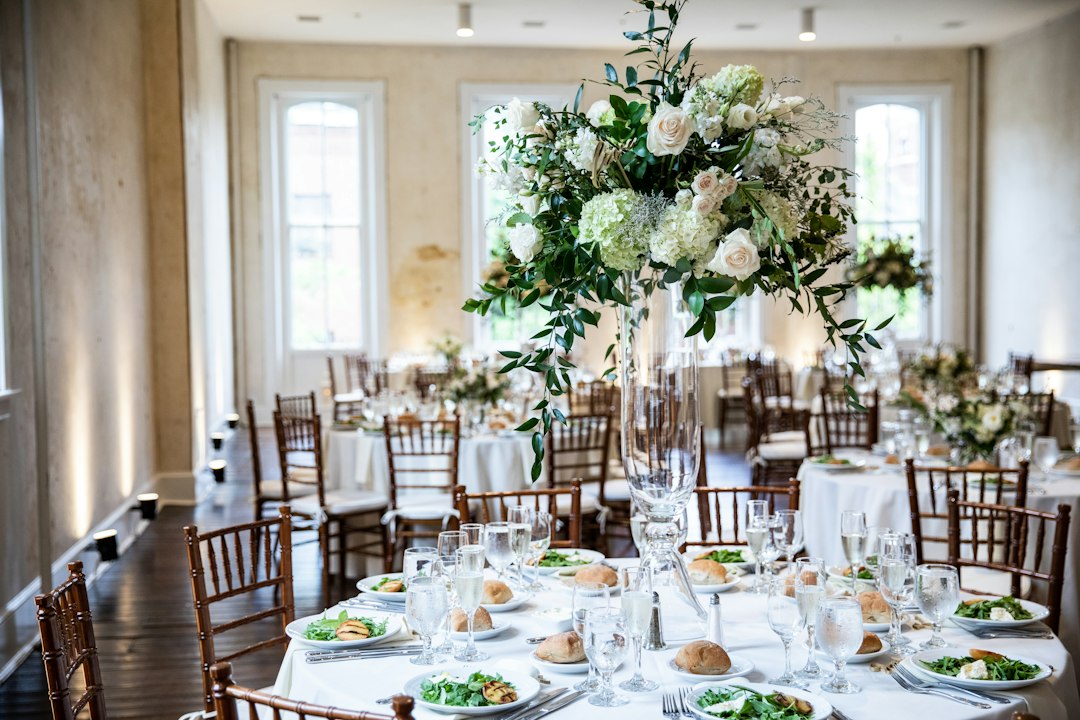
Wedding centerpieces generally fall into four structural categories: low and lush arrangements, tall or elevated designs, candelabra-based compositions, and minimalist clustered groupings. Each category serves a different function at the table — low centerpieces (typically 8 to 14 inches high) preserve sightlines for conversation, while tall centerpieces (30 to 48 inches from tabletop to bloom) create a sense of scale in rooms with 10-foot or higher ceilings. The choice between them usually comes down to venue architecture, guest count, and whether the couple wants the florals to double as a room-height focal point in photographs.
Beyond height, centerpieces are also classified by mechanics: foam-based designs for structured, dense shapes; hand-tied or “garden-style” arrangements built in water-filled glass for a looser, just-gathered look; and suspended or installation-style pieces that hang above the table rather than sitting on it. A reception for 150 guests across fifteen 72-inch round tables will typically mix two or three of these types to avoid visual monotony while keeping a unified palette.
How Do Low Wedding Centerpieces Differ From Tall Designs?
Low wedding centerpieces sit between 8 and 14 inches tall and are built to keep eye contact open across the table, which is why most planners recommend them for tables seating eight or more guests. Tall centerpieces, by contrast, use an elevated vase or candelabra stem — usually glass or mirrored metal — to lift the floral mass to 34 inches or higher, leaving the 14-to-30-inch “conversation zone” empty so guests can see one another beneath the blooms.
In practice, a ballroom with 150 guests often alternates the two: low, garden-style clusters of garden roses and ranunculus on half the tables, paired with tall candelabra arrangements dripping amaranthus on the rest. This rhythm keeps the room from feeling flat while controlling the total flower budget, since tall arrangements typically require 30 to 40% more stems per piece than their low counterparts.
What Role Does a Candelabra Play in Wedding Centerpiece Design?
A candelabra acts as the architectural skeleton for tall wedding centerpieces, supporting both the floral mass and the candlelight that gives receptions their characteristic warm glow after sunset. Most rental candelabras stand 32 to 40 inches tall with three to seven arms, each able to hold a taper or pillar candle alongside a small floral collar of greenery and blooms near the base of each arm.
Gold and silver finishes remain the two most requested candelabra metals for black-tie receptions, with gold typically paired with ivory, blush, and champagne palettes, while silver or mirrored finishes complement white, lavender, and sage-green schemes. Because open flame is involved, most Beverly Hills venues require drip-catching cups and a minimum 3-inch clearance between candle flame and any floral material — a detail that must be confirmed with the venue’s fire safety policy before the florist finalizes the mechanics.
How Do You Choose Flowers for Wedding Centerpieces?
Flower selection for wedding centerpieces depends on three technical factors: vase life under warm event lighting, bloom size relative to the arrangement’s scale, and seasonal availability. A reception held under 85°F ambient temperature with standard incandescent lighting can expect most cut flowers to hold for 6 to 10 hours without wilting, provided stems were hydrated in floral preservative solution for at least 2 hours before transport.
Garden roses, ranunculus, and peonies are the three blooms most frequently requested for romantic, garden-style wedding centerpieces, while orchids and anthurium are favored for modern or tropical-themed receptions because of their rigid stems and 10-to-14-day vase life. A peony’s symbolic association with romance and prosperity makes it a popular choice for spring weddings, though its bloom season is limited to April through June in most North American growing regions, which pushes summer and winter weddings toward garden roses or ranunculus as substitutes.
Why Is the Hydrangea Centerpiece So Popular for Weddings?
A hydrangea centerpiece is popular because a single hydrangea bloom, averaging 6 to 8 inches in diameter, provides the same visual coverage as six to eight garden roses, making it one of the most cost-efficient ways to build volume into a low or tall arrangement. This density also makes hydrangea an efficient “filler mass” that designers build around before adding focal flowers like garden roses or dahlias.
Fresh-cut hydrangea does require specific hydration care: stems should be cut at a 45-degree angle and conditioned in water for 4 to 6 hours, sometimes with a few seconds of stem-tip dipping in alum powder, to prevent the premature wilting hydrangea is known for in warm rooms. For couples drawn to this bloom, browsing Hydrangea arrangements ahead of the consultation helps establish realistic stem counts and color expectations, since hydrangea ranges from classic white and soft blue to antique green and burgundy depending on soil pH and variety.
Should You Use Roses, Tulips, or Orchids in a Wedding Centerpiece?
Roses, tulips, and orchids each suit different centerpiece styles: roses for classic, full-bodied arrangements with a 5-to-7-day vase life, tulips for relaxed spring designs that last only 3 to 5 days but offer unmatched movement as stems continue growing after cutting, and orchids for sculptural, long-lasting focal points that can survive 10 to 14 days with minimal maintenance. A couple planning an early-spring reception might lean on Tulips for their seasonal availability and soft color gradients, while a winter or destination wedding often favors Orchids for their resilience during transport and extended setup times.
Garden roses remain the most requested stem for wedding centerpieces overall, representing an estimated 35 to 40% of floral orders for Beverly Hills receptions based on typical luxury florist order volume. Their structured, cupped bloom form — distinct from the flatter, more delicate petal arrangement of a garden rose variety guide worth reviewing before placing a large order — photographs well under both daylight and the warmer 2700K lighting typical of evening receptions.
Shop Our Signature Collection
Hand-crafted luxury bouquets from our Rodeo Drive atelier, with same-day delivery across Beverly Hills, Bel Air & Los Angeles.
How Much Do Wedding Centerpieces Typically Cost?
Wedding centerpieces for a luxury reception generally range from $150 to $400 per table for low, garden-style designs, and $450 to $1,200 per table for tall or candelabra-based arrangements, depending on flower variety, stem count, and rental mechanics. These figures reflect Beverly Hills-market pricing as of recent seasons and typically include the vase or candelabra rental, floral material, labor, and delivery, but exclude linen, charger plates, or additional lighting.
Couples working with a fixed floral budget often mix centerpiece types strategically: placing higher-cost tall arrangements on 20 to 30% of tables (often the head table and tables nearest the dance floor) while using lower-cost, low centerpieces for the remainder. This approach preserves the visual impact of height and drama in key sightlines without multiplying costs across every table in a 150-guest reception.
What Factors Make Wedding Centerpieces More or Less Expensive?
The price of a wedding centerpiece is driven primarily by stem count, flower rarity, and vase or hardware rental costs rather than by labor time alone. A single tall arrangement built around 18 to 24 stems of peony or garden rose, plus trailing amaranthus and eucalyptus, can require $200 to $350 in raw flower cost before labor and rental fees are added.
Out-of-season flowers imported from growers in Ecuador, Colombia, or the Netherlands — common sources for garden roses and ranunculus sold in the United States — typically add a 15 to 25% premium compared to in-season, domestically grown stems. The table below outlines how four common centerpiece styles compare across height, approximate stem count, and typical cost per table.
| Centerpiece Style | Typical Height | Approx. Stem Count | Cost Range per Table | Best Suited For |
|---|---|---|---|---|
| Low garden-style cluster | 8–14 inches | 20–35 stems | $150–$400 | Tables of 8–10, conversation-focused seating |
| Tall candelabra arrangement | 32–48 inches | 40–60 stems | $450–$1,200 | Ballrooms with 10+ ft ceilings, head tables |
| Hydrangea-based mass centerpiece | 10–16 inches | 12–20 hydrangea blooms | $180–$350 | Budget-conscious full-coverage tables |
| Minimalist bud-vase cluster | 6–10 inches | 5–9 stems total | $90–$180 | Modern, micro-wedding, or long banquet tables |
How Do You Plan Wedding Centerpieces for a Reception Timeline?
Planning wedding centerpieces around a reception timeline means working backward from the ceremony start time to schedule delivery, setup, and photography access, since most arrangements need 60 to 90 minutes of on-site assembly before guests arrive. Florists typically request venue access 3 to 4 hours before the reception begins, particularly when candelabra pieces require flame-safety inspection by venue staff.
Perishable blooms like garden roses, ranunculus, and peonies are usually processed and conditioned 24 to 48 hours in advance at the studio, then transported in water buckets secured in a climate-controlled vehicle held between 36°F and 40°F to slow respiration and extend freshness through the event.
What Is the Best Order of Operations for Wedding Reception Flowers?
The most reliable order of operations starts with linens and table settings, followed by centerpiece placement, then candle lighting, and finally a walkthrough to adjust sightlines from the head table and dance floor. Skipping this sequence — for instance, placing florals before linens are steamed and set — risks water spotting on fabric or crushed stems from last-minute adjustments.
A practical checklist many Beverly Hills florists follow includes:
- Confirm final guest count and table layout 10 to 14 days before the event to lock stem orders.
- Process and condition all cut flowers 24 to 48 hours before delivery.
- Transport arrangements upright in water wherever vase design allows, cushioned against movement.
- Arrive on-site 3 to 4 hours before guest arrival for assembly and candle safety checks.
- Walk the room from a seated guest’s eye level to confirm sightlines across every table.
Missing any one of these steps is the most common reason centerpieces look rushed or asymmetrical in photographs, even when the flower quality itself is excellent.
How Does Venue Type Affect Wedding Centerpiece Choices?
Venue architecture directly dictates centerpiece scale: a ballroom with chandeliers and 12-foot ceilings can visually absorb a 42-inch tall arrangement, while a garden or tented reception with 8-foot sidewalls often looks better with low, 10-to-12-inch designs that don’t compete with surrounding greenery. Outdoor receptions also introduce wind as a mechanical factor, which is why many designers switch from tall, top-heavy vases to weighted, low urns when wind speeds are expected to exceed 10 mph.
Indoor hotel ballrooms, the most common Beverly Hills reception venue type, typically allow open flame with a drip tray and often require centerpieces to stay within a 24-inch footprint per table to leave room for charger plates and glassware. Confirming these dimensions with the venue’s event coordinator before finalizing centerpiece design prevents last-minute resizing on the morning of the wedding.
My Experience with Wedding Centerpieces
Over the course of building floral programs for receptions across Beverly Hills estates and hotel ballrooms, I’ve found that the single biggest misjudgment couples make is underestimating how much a room’s ceiling height changes the required scale of a centerpiece. I once consulted on a reception where the couple had selected 14-inch low arrangements for a ballroom with 16-foot coffered ceilings, and the tables looked almost bare in photographs until we swapped half of them for 40-inch candelabra pieces three days before the event.
I’ve also learned, through repeated late-summer weddings, that hydrangea needs far more aggressive hydration prep than most couples expect — stems conditioned for only an hour or two will often wilt visibly by hour five of an outdoor reception held above 80°F. On one July wedding at a tented venue, we pre-treated every hydrangea stem with an alum-dip method and still rotated in backup stems at the midpoint of cocktail hour, which confirmed for me that hydrangea-heavy centerpieces need a contingency plan whenever the forecast runs warm. These details rarely show up in generic planning guides, but they’re the difference between centerpieces that hold their shape through a five-hour reception and ones that visibly droop by dessert service.
How Do You Match Wedding Centerpieces to the Overall Reception Theme?
Matching wedding centerpieces to a reception theme starts with the three to four colors already established in the bridal party’s palette, then extends that scheme into vase material, candle color, and linen tone so the tablescape reads as one cohesive design rather than isolated elements. A black-tie reception with a champagne-and-ivory palette, for example, typically pairs cream garden roses and white ranunculus with gold candelabra and ivory taper candles rather than bright white votives, which can read too stark under warm lighting.
Texture matters as much as color: mixing a dense, rounded bloom like a hydrangea centerpiece with airy, linear elements such as sweet pea vines or trailing jasmine keeps a tablescape from feeling monotonous even within a tightly restricted two- or three-color palette. Many couples also echo their bridal bouquet’s dominant flower in miniature across each table centerpiece, creating a visual thread between the ceremony and reception that guests notice even if they can’t articulate why the two spaces feel connected.
Can Wedding Centerpieces Double as Take-Home Gifts or Decor?
Yes, many low and bud-vase-style wedding centerpieces are specifically designed in individual glass vessels so guests can take them home at the end of the night, which also reduces venue teardown time by 20 to 30 minutes per room. Couples who want this option typically request smaller, 6-to-10-inch arrangements across more vases per table rather than one large structural piece that can’t be divided.
Some couples repurpose their reception’s floral material into home decor after the event, drying hydrangea or incorporating leftover stems into an arrangement for their first home together; browsing Home Decor pieces during the planning process can help couples visualize how reception flowers might extend into their everyday space. Pairing that with ambient Candles at home echoes the candlelit reception atmosphere long after the wedding date has passed.
For couples also sending centerpiece-style arrangements as thank-you gifts to parents or wedding party members after the event, exploring Thank You arrangements in a similar palette keeps the floral story consistent from ceremony through post-wedding gestures of appreciation.
Order from Muguet Florist, Beverly Hills
Shop These Arrangements
Our Floral Services
Same-Day Delivery Areas
Send Flowers Today
Order by our same-day cutoff for hand-delivered arrangements across Beverly Hills, Bel Air, Hollywood & Los Angeles.
FAQ
How many stems are typically needed for one wedding centerpiece?
A low wedding centerpiece usually requires 20 to 35 stems depending on flower size, while a tall candelabra-based arrangement can require 40 to 60 stems to achieve full coverage from the base collar to the upper floral canopy. Hydrangea-heavy designs need fewer stems overall, often just 12 to 20 blooms, because each hydrangea head provides significantly more visual coverage than a single rose or ranunculus.
How far in advance should wedding centerpieces be ordered?
Most luxury florists recommend finalizing wedding centerpiece designs 3 to 4 months before the event date, with final guest counts and stem quantities locked in 10 to 14 days before the wedding. Peak season dates, particularly May through October, often require booking a florist 6 to 9 months in advance to secure preferred flower varieties like peony or garden rose.
Can wedding centerpieces be made without floral foam?
Yes, many designers now build wedding centerpieces using chicken-wire frames or reusable floral “frogs” submerged in water-filled vases instead of floral foam, which is not biodegradable and has drawn environmental concern in the floral industry. This method typically extends bloom freshness since stems draw water directly rather than through foam, though it requires more skilled hand-tying technique during assembly.
What is the ideal height for a wedding centerpiece on a round table?
For an 8-to-10-guest round table, centerpieces should stay either under 14 inches or above 30 inches, avoiding the 14-to-30-inch range that blocks eye contact across a standard 60-inch or 72-inch round table. This “sightline rule” is one of the most consistent technical guidelines used by event designers when planning mixed-height centerpiece layouts across a reception room.
Do wedding centerpieces need to match the bridal bouquet exactly?
No, wedding centerpieces typically echo rather than exactly replicate the bridal bouquet, often repeating one or two dominant flowers or colors while using different, often more cost-effective, filler blooms to manage the overall floral budget. This approach, combined with ideas drawn from flower symbolism and meaning research, allows couples to maintain thematic consistency without duplicating identical, often expensive, stems across dozens of tables.
Sources:
Royal Horticultural Society
Wikipedia
