
Flower Meanings Articles
Tulip Meaning: Color Symbolism, Romance & Spring Significance
Sep
Tulip meaning has fascinated gardeners, poets, and gift-givers for nearly five centuries, tracing a path from Ottoman palace gardens to the canal-side markets of 17th-century Holland and, eventually, to modern flower counters across Beverly Hills. At its foundation, the tulip represents perfect love, but the full picture is far richer once color enters the equation: a red tulip speaks a different sentence than a purple tulip or a pink tulip, and the flower’s springtime bloom cycle adds another layer of meaning tied to renewal and new beginnings. This article examines what tulips symbolize historically and emotionally, how individual tulip colors shift the message, what role the tulip plays in spring symbolism, and how to choose or care for tulips when the occasion calls for precision rather than guesswork. Along the way, we’ll also touch on how tulips compare to other classic flowers, such as Roses, so the symbolism lands in proper context.
What Does Tulip Meaning Actually Represent?
Tulip meaning centers on the idea of declared, perfect love — a love so certain it doesn’t require elaborate justification. Unlike the rose, whose symbolism carries centuries of religious and literary baggage involving thorns and martyrdom, the tulip’s core message stayed comparatively simple: devotion, deep affection, and an almost reckless certainty about one’s feelings. This directness is part of why tulips became one of the most gifted spring flowers across Europe and North America by the early 20th century.
The flower’s association with love dates back to a Persian legend in which a heartbroken prince, Farhad, died for his love Shirin, and tulips sprang from his blood — a story that predates the flower’s arrival in Europe by hundreds of years. That legend explains why red tulips in particular still carry a “true love” connotation in most Western flower dictionaries. A single stem of 20 to 24 inches in height, typical for a greenhouse-grown tulip, can convey that message just as effectively as a two-dozen bouquet, which is part of the flower’s appeal for buyers who want emotional weight without excess.
How Did Tulip Symbolism Travel From Persia to the Netherlands?
Tulip symbolism moved westward through Ottoman Turkey, where the flower was cultivated in imperial gardens as early as the 10th century and later became a national emblem under Sultan Ahmed III during the so-called “Tulip Era” of the early 1700s. Dutch traders imported tulip bulbs in the 1550s, and by 1636 the bulbs had become so prized that a single rare bulb — notably the streaked “Semper Augustus” — reportedly sold for the equivalent of a skilled tradesman’s annual wage.
This period, known as Tulip Mania, collapsed in February 1637 but left a permanent cultural residue: the tulip became shorthand for both beauty and fleeting fortune. Today’s tulip meaning still carries a faint echo of that history, reminding buyers that the flower’s charm is tied to scarcity and timing, since most tulip varieties bloom for only 3 to 7 days once fully open in a vase.
How Does Tulip Color Symbolism Change the Message?
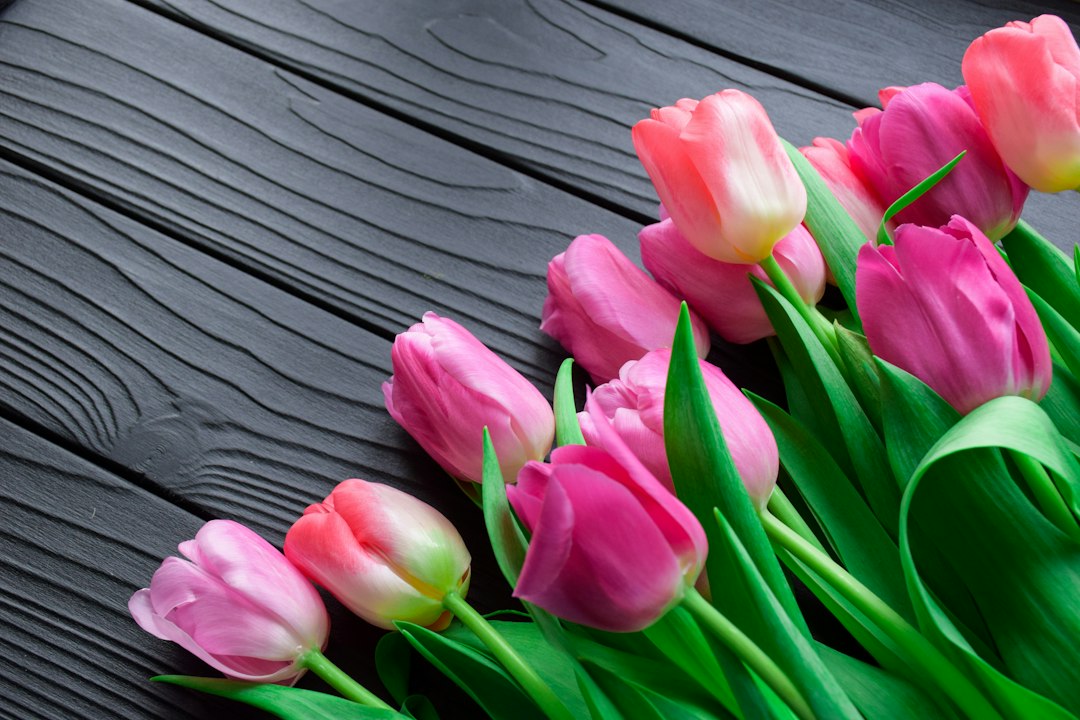
Tulip color symbolism functions almost like a secondary vocabulary layered on top of the flower’s general meaning, so the exact shade you choose can shift a bouquet from romantic to celebratory to purely decorative. Red signals passionate, committed love; yellow, once associated with hopeless love in Victorian flower language, now more commonly signals cheerful friendship and sunshine; purple tulip meaning leans toward royalty and admiration; and pink tulip varieties suggest affection, caring, and good wishes rather than full romantic declaration.
Because tulips are bred in over 3,000 registered cultivars according to the Royal General Bulb Growers’ Association (KAVB) in the Netherlands, color options extend well beyond the basic palette — bicolor “Rembrandt” tulips, near-black “Queen of Night” varieties, and fringed parrot tulips each add nuance. A gift-giver choosing between a dozen red Darwin hybrid tulips and a mixed bouquet of pink and white varieties is, whether consciously or not, selecting between two distinct emotional registers.
What Does a Purple Tulip Mean Specifically?
Purple tulip meaning is tied primarily to royalty, admiration, and sophistication, a connotation that dates back to the dye’s historical rarity — Tyrian purple pigment once cost more per ounce than gold, so purple flowers inherited an association with wealth and high status. A bouquet of purple tulips, often in shades like “Negrita” or “Passionale,” reads as a compliment to someone’s taste or accomplishments rather than a declaration of romance.
In practice, purple tulips work well for a promotion, a gallery opening, or an anniversary milestone where admiration matters as much as affection. Florists frequently pair deep purple stems with silver or white accent blooms to intensify the regal effect, and a vase arrangement of 15 stems at roughly 14 inches in diameter tends to read as formal enough for an office reception or milestone celebration such as those found in the Anniversary collection.
Why Is Pink Tulip Symbolism Associated With Caring Rather Than Passion?
Pink tulip symbolism sits in the gentler end of the emotional spectrum, historically linked to good wishes, caring, and confidence rather than intense romantic passion. This softer meaning made pink tulips a popular choice for new-parent congratulations and for expressing appreciation toward a friend or mentor rather than a romantic partner.
Light pink varieties such as “Angelique,” a peony-flowering tulip with 3-inch double blooms, are frequently chosen for baby showers and thank-you gestures because the color reads as warm without implying courtship. A bouquet combining 10 pink tulips with a few stems of white filler is a common choice in the 12- to 15-inch arrangement range, often selected from florists’ New Baby offerings when marking a birth.
Shop Our Signature Collection
Hand-crafted luxury bouquets from our Rodeo Drive atelier, with same-day delivery across Beverly Hills, Bel Air & Los Angeles.
How Does Tulip Meaning Connect to Spring Symbolism?
Tulip meaning is inseparable from spring symbolism because the plant’s biology enforces the connection: tulip bulbs require a cold dormancy period of roughly 12 to 16 weeks at temperatures between 35°F and 48°F before they can bloom, which is why they emerge reliably in March and April across USDA hardiness zones 3 through 8. That predictable late-winter-to-spring emergence made tulips an enduring symbol of renewal, rebirth, and the end of winter dormancy long before modern horticulture could explain the vernalization process scientifically.
In the Netherlands, the National Tulip Day festival held on the third Saturday of January marks the symbolic opening of the growing season, even though the fields themselves don’t reach peak bloom until early May. This cultural timing reinforces tulips as a herald of spring rather than a mid-summer or autumn flower, a distinction worth noting since buyers sometimes confuse tulip availability with that of sunflowers, which peak from July through September.
What Role Does the Tulip Play in Easter and Spring Celebrations?
Tulips function as one of the primary botanical symbols of Easter and general spring renewal, largely because their bloom window in most temperate climates overlaps directly with the Christian Holy Week and Passover calendar. Their cup-shaped form, often 2 to 4 inches across at full bloom, is also read as a symbol of new life opening after a long dormant period, paralleling themes of resurrection and rebirth.
Beyond religious contexts, tulips dominate secular spring décor from March through May, appearing in home centerpieces, window displays, and table arrangements at roughly the same frequency as daffodils and hyacinths. A 10-stem tulip arrangement in a clear glass cylinder vase 6 inches in diameter remains one of the most requested spring designs, and tulips are commonly paired with Hydrangea for added textural contrast in seasonal centerpieces.
What Are the Main Types of Tulip Meaning by Color and Form?
Tulip meaning subdivides not only by color but by flower form, since variegated, fringed, and double-flowering types each carry slightly different connotations layered onto the base color symbolism. A striped or “broken” tulip, for instance, historically signaled beautiful eyes in Victorian flower dictionaries, a legacy of the Tulip Mania era when such patterns (actually caused by a mosaic virus) were the most prized and expensive varieties.
White tulips signal forgiveness and worthiness, making them a fitting choice for an apology or a respectful condolence gesture, while variegated tulips suggest admiration for someone’s striking or unique qualities. Black or near-black tulips, despite the dramatic appearance, are generally associated with strength and elegance rather than anything morbid, since true black pigment doesn’t exist in tulip petals — the deepest cultivars are actually a very dark maroon-purple.
- Red tulips: declared, passionate love; historically tied to the Farhad and Shirin legend.
- Yellow tulips: cheerful thoughts and warm friendship in modern usage, though Victorian-era meaning implied hopeless love.
- Purple tulips: royalty, admiration, and respect, drawing on the historical cost of purple dye.
- Pink tulips: caring, good wishes, and confidence, frequently used for congratulatory occasions.
- White tulips: forgiveness, worthiness, and respectful sympathy.
- Variegated or striped tulips: admiration for beauty and uniqueness, inherited from Tulip Mania-era prestige.
- Orange tulips: energy, enthusiasm, and appreciation, often used in thank-you arrangements.
How Do Tulip Colors Compare Side-by-Side for Gifting Purposes?
Comparing tulip colors directly makes it easier to match a bouquet to an occasion without second-guessing the underlying symbolism. The table below summarizes typical bloom size, average vase life, and the primary emotional message associated with each major tulip color category grown commercially today.
| Tulip Color | Primary Meaning | Typical Bloom Size | Average Vase Life | Best Occasion |
|---|---|---|---|---|
| Red | Passionate, declared love | 2.5–3.5 inches | 5–7 days | Valentine’s Day, anniversaries |
| Purple | Royalty, admiration | 2–3 inches | 6–8 days | Promotions, milestone events |
| Pink | Caring, good wishes | 2.5–4 inches (peony types) | 5–6 days | New baby, thank-you gestures |
| Yellow | Friendship, cheerfulness | 2–3 inches | 4–6 days | Get well, casual gifting |
| White | Forgiveness, respect | 2–3 inches | 6–7 days | Sympathy, apology |
How Should You Choose Tulip Colors for a Specific Occasion?
Choosing the right tulip color for an occasion comes down to matching the event’s emotional register with the color chart above rather than defaulting to red for every scenario. A congratulatory gift for a colleague’s promotion reads more appropriately in purple or orange than in red, which can feel overly intimate in a professional setting.
For romantic occasions such as a first anniversary or Valentine’s Day, a dozen red tulips at 18 to 20 inches in stem length, arranged in a clear glass vase with 2 inches of water changed every other day, delivers the classic message without ambiguity. For less intense but still affectionate gestures — a “thinking of you” note to a friend recovering from surgery — a mixed bouquet of yellow and pink tulips avoids the heavier romantic undertone of red.
Which Occasions Pair Best With Which Tulip Meaning?
Matching tulip meaning to occasion works best when the buyer considers both color and context together, since the same red tulip that suits a romantic anniversary might feel mismatched at a colleague’s graduation. Below is a practical occasion-to-color guide drawn from common florist practice.
- Valentine’s Day or anniversaries: red or deep purple tulips, often paired with stems from the Valentine’s Day collection.
- Congratulations or graduations: orange or yellow tulips, reflecting achievement and energy, often sourced from Graduation arrangements.
- Sympathy or apology: white tulips, conveying respect and forgiveness without overstatement.
- New baby or thank-you notes: pink tulips, signaling warmth without romantic implication.
- Get-well wishes: a mixed bouquet of yellow and white tulips, chosen for their cheerful but gentle tone.
Tulips also pair thoughtfully with other symbolic flowers when an arrangement needs more visual weight; a designer might combine tulips with orchid stems for textural contrast, drawing from the Orchids selection, or wrap a mixed spring bundle using the Wrap Bouquet style favored for gift presentations.
My Experience with Tulip Meaning in Daily Floral Design
Working with tulips week after week in a Beverly Hills flower studio taught me that clients rarely arrive already knowing the nuances of tulip color symbolism — most default to “just pink, please” without realizing that a warmer coral-pink variety like “Apricot Beauty” reads very differently from a cool-toned “Foxtrot” pink. I’ve found that walking a customer through two or three stems side by side, under natural light near the shop’s front window, changes their final choice roughly half the time.
One recurring observation from handling several hundred tulip stems per week during peak March-to-May season: tulips continue growing after being cut, often adding half an inch to an inch in height over 48 hours in the vase, which surprises clients who expect the stems to stay static like a rose. I also routinely advise customers that tulips droop toward light sources, a behavior called negative phototropism lag, and rotating the vase a quarter turn daily keeps the arrangement symmetrical rather than lopsided.
Another pattern I’ve noticed involves corporate clients ordering purple tulip arrangements almost exclusively for law firm receptions and gallery events, rarely for personal gifts, which confirms how strongly the royalty association still holds in practice. Meanwhile, pink and white mixed bouquets dominate our new-parent orders by a wide margin, typically outselling red tulip orders by three to one during the April baby-shower season, reinforcing that the color-specific meanings aren’t just historical trivia — they actively shape real purchasing decisions today.
Order from Muguet Florist, Beverly Hills
Shop These Arrangements
Our Floral Services
Same-Day Delivery Areas
Send Flowers Today
Order by our same-day cutoff for hand-delivered arrangements across Beverly Hills, Bel Air, Hollywood & Los Angeles.
FAQ
Does tulip meaning differ significantly from rose meaning?
Yes, tulip meaning tends to be more direct and less layered with religious or literary history than rose meaning, which carries centuries of symbolism tied to martyrdom and courtly love; tulips instead emphasize straightforward, perfect love and seasonal renewal, and a detailed comparison of rose shades can be found in our guide on rose color meanings and what every shade says.
What does a yellow tulip mean today compared to Victorian times?
A yellow tulip today signals cheerful friendship, warmth, and sunshine, a shift from the Victorian-era association with hopeless or unrequited love; modern florists treat yellow tulips as an upbeat, platonic gift rather than a romantic caution sign.
How long do tulips typically last once cut and arranged in a vase?
Most cut tulips last between 4 and 8 days depending on color and variety, with cooler room temperatures around 65°F to 68°F and fresh water changed every 2 days extending vase life closer to the upper end of that range.
Is there a specific meaning behind giving a single tulip versus a full bouquet?
A single tulip stem, particularly in red, communicates the same core message of perfect love as a full bouquet, since tulip symbolism doesn’t depend on quantity the way some flower traditions do; a dozen or more stems simply intensify the visual statement rather than changing its meaning.
Are tulips associated with any specific birth month or zodiac symbolism?
Tulips are commonly associated with the 11th wedding anniversary rather than a specific birth month, though they’re frequently grouped with other spring blooms in general seasonal birth-flower discussions; readers interested in birth-month flower traditions can compare this with the symbolism covered in our November birth flower guide on chrysanthemum meaning.
For a broader look at how flower symbolism works across species and cultures, see our complete reference on flower meanings and the language of flowers, and browse current seasonal stems in the Tulips collection for arrangements ready for same-day Beverly Hills delivery.
Sources
Wikipedia: Tulip
Royal Horticultural Society: Growing Tulips
