
Flower Meanings Articles
Rose Color Meanings: What Every Shade Says
Sep
A single stem can say more than a paragraph of text, and nowhere is that truer than with roses, the flower most people reach for when words alone feel insufficient. Rose color meanings have been shaped over centuries of Floriography, the Victorian-era practice of assigning sentiment to blooms, and today they still guide how a red rose meaning differs sharply from a white rose meaning or a yellow rose meaning. This article walks through the symbolism behind roughly a dozen common shades, explains how florists at Muguet Florist Beverly Hills apply that Color Symbolism when designing arrangements, and gives practical guidance for choosing the right hue for anniversaries, sympathy tributes, or a simple Tuesday gesture of thanks.
What Do Rose Color Meanings Actually Represent?
Rose color meanings represent a coded emotional vocabulary that assigns specific sentiments — love, friendship, apology, celebration, or mourning — to each hue of the flower, allowing a bouquet to communicate a precise message without a single written word. This system traces back to 18th- and 19th-century Europe, where sending the wrong shade could be read as a social misstep, and it survives today mostly intact in how gift-givers select stems for weddings, funerals, and corporate gifts alike.
The practice isn’t arbitrary folklore; it grew out of observable associations between color and human emotion that psychologists still study. Red is linked to arousal and urgency in color-perception research, which is part of why a dozen red roses at $85 to $150 retail has remained the default romantic gesture in the United States for well over a century. Yellow, by contrast, sits at the warm end of the spectrum and is more commonly tied to optimism and platonic warmth than romance, which explains why florists rarely recommend it for a first date.
How Did Rose Symbolism Originate Historically?
Rose symbolism originated in classical antiquity, where the Greeks associated the flower with Aphrodite and the Romans later connected it to Venus, but the structured “language of flowers” that modern gift-givers recognize was codified in France and England between roughly 1810 and 1880. Books such as Charlotte de la Tour’s “Le Langage des Fleurs” (1819) catalogued dozens of species with assigned meanings, and roses — thanks to their existing mythological weight — received the most detailed color-by-color breakdown of any flower in these guides.
By the Victorian period, sending a “tussie-mussie,” a small hand-tied posy, was a socially acceptable way to convey feelings that etiquette forbade saying aloud. A 20-stem mixed posy of red and white roses, for instance, historically signaled unity in a marriage proposal. That layered tradition is why modern rose color meanings still carry more nuance than most other cut flowers, including tulips or hydrangeas, which acquired their symbolic associations more recently and with less documentation.
What Does Each Rose Color Actually Mean?
Each rose color carries a distinct meaning rooted in both historical Floriography and contemporary gifting norms, ranging from the red rose meaning of romantic love to the white rose meaning of reverence and new beginnings. Understanding these distinctions helps buyers avoid mismatched sentiment — sending yellow to a romantic partner, for example, can read as platonic rather than passionate.
Muguet Florist’s design team fields dozens of consultations weekly where customers ask which shade fits their occasion, and the honest answer is that meaning shifts slightly depending on stem count, companion foliage, and even the rose variety itself (a David Austin garden rose in blush pink reads differently than a tightly budded hybrid tea in the same shade). Below is a breakdown of the twelve shades most commonly stocked in professional coolers.
What Is the Red Rose Meaning in Modern Gifting?
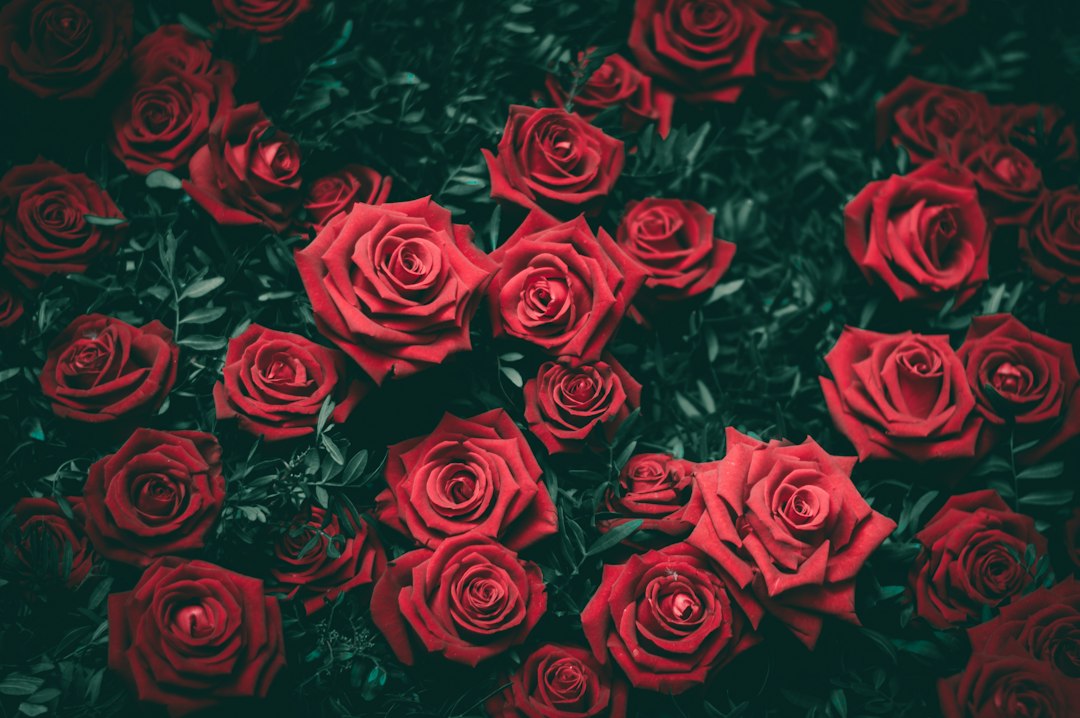
The red rose meaning centers on romantic love, deep passion, and committed desire, making it the standard choice for anniversaries, Valentine’s Day, and marriage proposals. A dozen long-stemmed red roses, typically cut to 24 to 28 inches for premium arrangements, remains the single best-selling stem combination in North American floristry, with U.S. consumers purchasing over 250 million roses around Valentine’s week alone according to USDA floriculture data.
Darker red varieties, such as ‘Black Baccara’ or ‘Black Magic,’ push the meaning toward intensity and mystery rather than lighthearted affection, which is why they’re favored for tenth-anniversary gifts rather than early courtship. For couples marking a milestone, browsing Anniversary arrangements built around deep crimson tones is a reliable way to match the gift to the occasion’s gravity.
What Is the White Rose Meaning Behind Purity and Remembrance?
The white rose meaning centers on purity, reverence, and new beginnings, which is why it appears constantly in bridal bouquets, christenings, and sympathy tributes despite representing emotionally opposite occasions. Varieties like ‘Vendela’ or ‘Akito,’ with their ivory-cream tone and 3 to 4-inch bloom diameter, are the industry standard for both weddings and funerals because the color reads as solemn rather than celebratory or somber specifically — it’s a blank, dignified canvas.
In sympathy contexts, a wreath of 36 to 50 white rose stems set on a 24-inch frame communicates respect without the emotional intensity red would imply. Families arranging services often pair white roses with white lilies for a $200 to $350 standing spray; those exploring options for a service should look at Sympathy collections that use this exact pairing.
What Is the Yellow Rose Meaning for Friendship and Joy?
The yellow rose meaning centers on friendship, joy, and platonic warmth rather than romance, making it one of the few rose colors historically considered inappropriate for courtship. In the 19th century, a yellow rose could even signal jealousy or waning affection, though that darker connotation has faded almost entirely from modern usage in favor of a cheerful, celebratory reading.
Today, a bright bunch of ‘Sunblaze’ or ‘Skyline’ yellow roses, often mixed with sunflowers or orange ranunculus, is a common choice for congratulating a friend on a promotion or welcoming someone home. Shoppers marking a professional win often pair yellow roses from the Roses collection with a card rather than romantic language, keeping the gesture firmly in friendship territory.
How Do Pink, Orange, and Rare Rose Colors Differ in Symbolism?
Pink, orange, and rarer rose shades occupy a middle emotional register between the romantic intensity of red and the platonic warmth of yellow, each carrying its own graduated meaning depending on saturation. Light pink suggests gentleness and admiration, hot pink suggests gratitude and appreciation, and orange suggests enthusiasm, fascination, or the early excitement of a new relationship.
These intermediate colors give gift-givers more precision than the three primary hues allow, which matters for occasions that don’t fit neatly into “romance” or “friendship.” A recently promoted colleague, a new grandmother, or someone recovering from surgery each calls for a different shade, and understanding the gradient prevents an overly intense or oddly casual message.
What Does a Pink Rose Symbolize Compared to Red?
A pink rose symbolizes admiration, gratitude, and gentle affection, sitting one register below the passionate intensity of the red rose meaning, which makes it appropriate for a wider range of relationships, from a mother to a new acquaintance. Pale blush varieties like ‘Sweet Avalanche,’ with blooms around 2.5 inches across, are especially popular for Mother’s Day, while deeper rose-pink tones like ‘Hot Princess’ skew closer to romantic without red’s full intensity.
Because pink spans such a wide tonal range, professional growers classify at least four sub-shades — blush, classic pink, hot pink, and coral-pink — each with slightly different symbolic weight. Blush is used almost exclusively for gratitude and admiration, while hot pink is now the preferred color for saying “thank you” in a way that feels warmer than white but less loaded than red, making it a frequent pick within Thank You arrangements.
What Do Orange and Lavender Roses Mean in Rare Color Symbolism?
Orange roses mean enthusiasm, fascination, and the excited early stage of attraction, while lavender roses — a genuinely rare hue achieved through selective breeding rather than dye — mean enchantment, wonder, or love at first sight. Both colors emerged into commercial floriculture later than red, white, pink, and yellow, with true lavender varieties like ‘Cool Water’ only becoming widely available to growers in the past three to four decades.
Because these tones remain less common in supermarket bouquets, receiving an orange or lavender rose tends to register as more deliberate and personalized, since the sender clearly went beyond the standard palette. A stem of ‘Free Spirit’ orange rose, with its coral-to-tangerine gradient, often appears in autumn arrangements alongside marigolds for exactly this reason of seasonal distinctiveness.
How Should You Choose a Rose Color for a Specific Occasion?
Choosing a rose color for a specific occasion means matching the flower’s established symbolism to the emotional tone of the event, rather than defaulting to red for every gift. A birthday calls for a different register than a condolence card, and mismatching the two — say, sending deep red to a coworker’s retirement party — can read as socially awkward even if the gesture is well-intentioned.
Muguet Florist’s consultation process typically starts by asking three questions: who is the recipient, what is the relationship, and what tone should the arrangement strike. From there, stem color, count, and companion greenery (eucalyptus, seeded eucalyptus, or Italian ruscus) get layered in to fine-tune the final message.
Which Rose Colors Work Best for Celebratory Occasions?
Yellow, orange, and coral roses work best for celebratory occasions such as graduations, promotions, and welcome-home gatherings, because their warm, high-saturation tones read as festive rather than romantic or somber. A mixed arrangement of 18 stems combining ‘Sunblaze’ yellow with ‘Free Spirit’ orange, set in a 10-inch clear glass cube, typically runs $95 to $140 and suits most joyful milestones.
For graduation specifically, many clients request a taller arrangement — 20 to 24 inches in overall height — so it stands out at a ceremony or reception table. Those planning for a spring commencement season should browse the Graduation collection, which leans heavily on this warm-toned palette, while a similarly upbeat approach fits Congratulations gifts for new jobs or business launches.
Which Rose Colors Suit Comfort and Sympathy Occasions?
White, soft peach, and pale lavender roses suit comfort and sympathy occasions because their muted saturation communicates calm and reflection rather than celebration or urgency. A hospital arrangement, for instance, benefits from lower-intensity colors since bright red or hot pink can feel visually overwhelming in a recovery setting.
For a get-well gift, florists commonly recommend a smaller arrangement of 8 to 12 stems in a 6-inch vase to avoid overcrowding a bedside table, often blending white roses with pale pink for warmth without intensity. Buyers can find this exact style within the Get Well category, and a comparable subdued approach applies to Thinking of You gifts sent during a difficult week.
My Experience with Rose Color Meanings in Daily Floral Design
Over years of building arrangements at the Beverly Hills studio, I’ve noticed that customers often arrive certain they want “the romantic one” and leave surprised to learn that red isn’t always the strongest choice. I once worked with a client sending flowers to his mother-in-law after a tense family visit; red felt too intense, white felt too funereal, so we settled on a blush-and-coral blend of 15 stems that read as warm without being loaded, and he later told me it was exactly the tone he’d struggled to name himself.
I’ve also watched how quickly customers correct course once they understand the yellow rose meaning isn’t simply “cheerful” but specifically platonic — more than one person has swapped a dozen yellow stems for a mixed pink-and-white bouquet after realizing they wanted to signal something slightly more romantic than friendship. That kind of on-the-spot recalibration happens almost weekly, and it’s why I always ask about the relationship before suggesting a palette rather than starting with color first.
One recurring lesson from the design floor: stem maturity changes how color reads. A rose harvested at a tight bud stage, common with imports from Ecuador or Colombia at around 5,500 to 6,500 feet elevation, holds a deeper, more saturated color for the first 3 to 4 days of vase life before opening and lightening. Clients who want that intense red or saturated lavender for a single-day event, like a wedding ceremony, should request tighter buds rather than fully bloomed stems, which is a detail rarely explained outside professional circles.
How Do Rose Colors Compare Side by Side for Symbolism and Care?
Comparing rose colors side by side clarifies not just symbolism but also practical differences in vase life, typical stem cost, and ideal occasion, since these factors often influence which shade a buyer ultimately chooses. Vase life varies slightly by variety and pigment stability, with deeper reds sometimes lasting a day or two longer than delicate pastels under identical care conditions of 68 to 72°F room temperature and fresh water changed every 2 days.
The table below summarizes the core distinctions professional florists reference when advising clients, based on typical commercial rose varieties available through U.S. wholesale channels.
| Rose Color | Primary Symbolism | Typical Occasion | Average Vase Life | Common Variety Example |
|---|---|---|---|---|
| Red | Romantic love, passion | Anniversary, Valentine’s Day | 7–10 days | ‘Freedom’ |
| White | Purity, reverence, new beginnings | Weddings, sympathy | 7–9 days | ‘Vendela’ |
| Yellow | Friendship, joy | Congratulations, get well | 6–8 days | ‘Sunblaze’ |
| Pink (blush) | Admiration, gratitude | Mother’s Day, thank you | 7–9 days | ‘Sweet Avalanche’ |
| Orange | Enthusiasm, fascination | Graduation, birthday | 6–8 days | ‘Free Spirit’ |
| Lavender | Enchantment, wonder | Special romantic gestures | 5–7 days | ‘Cool Water’ |
These figures assume proper care: trimming stems at a 45-degree angle, removing foliage below the waterline, and keeping arrangements away from direct sunlight or heating vents. Buyers assembling a gift around a specific event should also weigh presentation format, since a Wrap Bouquet generally has a slightly shorter vase life than an arrangement placed directly in floral foam and water.
What Other Factors Influence How Rose Color Meanings Are Perceived?
Stem count, companion flowers, and packaging style all influence how a given rose color’s meaning is ultimately perceived, sometimes as much as the color itself. A single red rose reads as a quiet, intimate gesture, while two dozen suggest a grand, public declaration; the meaning scales with quantity even though the underlying symbolism doesn’t change.
Pairing also matters: red roses mixed with baby’s breath soften the intensity toward tenderness, while red paired with dark greenery like negative baccara ruscus reads more dramatic and formal. Consider these common pairing patterns:
- Red roses with white roses (12 and 12): traditionally signals unity, often used in proposals
- Yellow roses with orange ranunculus: reinforces platonic celebration for graduations
- White roses with eucalyptus only: emphasizes minimalism, common in modern sympathy design
- Pink roses with peonies: intensifies softness and admiration, popular for Mother’s Day
- Lavender roses with silver dusty miller: heightens the “wonder” association for anniversaries
Anyone assembling a gift for a first date or a “just because” gesture should keep the color-to-quantity ratio modest — three to six stems generally reads as thoughtful rather than overwhelming, a detail often overlooked when browsing Just Because arrangements online.
FAQ
What is the most historically accurate red rose meaning?
The most historically accurate red rose meaning is deep romantic love and passionate desire, a symbolism traced back to Greek and Roman mythology and reinforced through Victorian-era Floriography guides that consistently ranked red as the strongest declaration among all rose colors.
Does the white rose meaning change between weddings and funerals?
The core white rose meaning of purity and reverence stays consistent between weddings and funerals, though the emotional context shifts; at weddings it emphasizes new beginnings and innocence, while at funerals the same purity reads as respect and peaceful remembrance for the person being honored.
Why is the yellow rose meaning associated with friendship rather than romance?
The yellow rose meaning became associated with friendship rather than romance during the Victorian period, when yellow’s brightness was linked to platonic joy and, in some interpretations, mild jealousy, a legacy that softened over time into today’s cheerful, non-romantic symbolism.
How many rose colors have an established meaning in rose symbolism?
At least ten to twelve rose colors have well-established meanings within modern rose symbolism, including red, white, yellow, pink, orange, lavender, peach, coral, burgundy, and black-red, each tied to a distinct emotional or occasion-based association recognized across professional floristry.
Can mixing rose colors in one bouquet dilute their individual symbolism?
Mixing rose colors in one bouquet doesn’t dilute their symbolism so much as blend it, since combinations like red-and-white or pink-and-yellow create layered meanings — unity plus love, or friendship plus admiration — that professional florists use deliberately rather than accidentally.
For readers who want the fuller picture beyond roses alone, the broader guide on the complete language of flowers covers how other blooms fit into the same symbolic framework, and those celebrating a June birthday may also enjoy the detailed breakdown in June’s birth flower guide covering roses and honeysuckle.
Sources
Royal Horticultural Society – Roses
Wikipedia – Language of Flowers
